
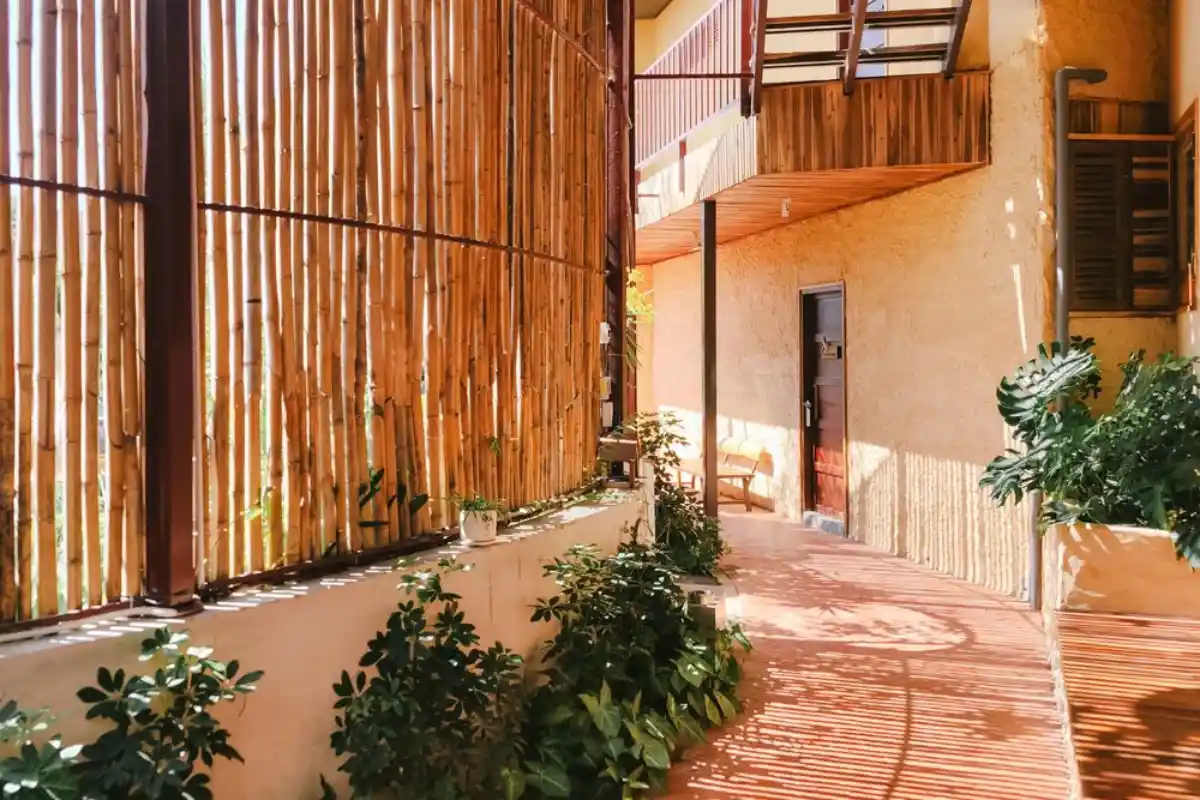
Your Fence Isn’t the Only Way to Get Privacy
A new colobond fence solves privacy the blunt way. It’s effective, sure, but it’s also flat, uniform, and identical to about half the fences on the same street. Plenty of homeowners want the privacy without the feeling of living inside a shipping container, and that’s usually where bamboo screening enters the conversation instead of another quote from a fencing contractor.
It solves the same problem. It just doesn’t look like it’s solving a problem.
Why People Actually Choose Living Screens
A dense row of bamboo does what a fence does, blocks sightlines, but it also moves in the wind, changing with the seasons, and softens a boundary rather than announcing it. Neighbours looking over a fence feel confrontational. Neighbours looking at a green wall that happens to be six metres tall feel like they’re looking at landscaping. Same outcome, completely different feeling for everyone involved.
There’s also the noise factor, which gets underestimated constantly. A dense planting doesn’t block sound the way a solid wall does, not entirely, but it does soften and diffuse it more than most people expect from something that isn’t concrete or timber.
Why Some Bamboo Ends Up in the Neighbour’s Yard
This is the part that trips up almost everyone buying bamboo for the first time, and it matters more than any other decision in the whole process. Running bamboo spreads through underground rhizomes, sometimes travelling metres from where it was planted and popping up in a neighbour’s yard entirely uninvited. Clumping varieties don’t do that. They grow outward slowly from a central base and mostly stay put, which is why they’re almost always the right call for a boundary hedge.
A few clumping species that hold up well in Australian gardens:
- Bambusa textilis, fast growing with a tight, elegant clump
- Slender weavers, a popular mid-height option for narrower spaces
- Gracilis, one of the most common choices for tight side yards
- Multiplex hedge, dense enough for genuine privacy screening in a compact footprint
Running bamboo isn’t inherently bad. It’s just the wrong choice for a boundary planting unless there’s a root barrier installed properly, and even then it needs monitoring.
How Fast It Actually Grows
Bamboo has a reputation for growing at an almost alarming rate, and depending on species and conditions, that reputation is fairly earned. Established clumping varieties can add a metre or more of height a year once conditions are right. The first year or two is slower though, since the root system needs to establish itself before it can support that kind of growth above ground.
Honestly, that early slow period is the part most people underestimate. It looks unimpressive for a year, sometimes two, and then the growth catches up all at once.
What Actually Keeps It Healthy
Bamboo isn’t maintenance-free, despite what a lot of nursery signage implies. Watering matters most in the first two summers, before the roots have properly established. After that it needs feeding a couple of times a year or the growth thins out and starts looking sparse rather than full, and part of what makes it worth the effort is that bamboo is considerably sustainable once it’s established, needing far less ongoing input than most alternatives. Older culms are worth cutting back occasionally too, mostly because a screen left alone for years ends up woody and tired-looking at the base even while the top keeps growing fine.
Poor drainage causes more bamboo deaths than frost and neglect combined, which surprises people who assumed the risk was cold or forgetting to water. Waterlogged roots rot, and a screen that’s been thriving for two years can decline fast once drainage becomes a problem.
Worth Getting Right the First Time
Most of the regret comes down to a handful of avoidable decisions. Picking the wrong species for space. Planting too close to a boundary without checking how wide it gets at maturity. Skipping a root barrier on anything that isn’t a genuine clumping variety. None of it is hard to get right. They just require actually asking the right questions before anything goes in the ground, rather than grabbing whatever looks green and leafy at the nursery that weekend.